Marine Electronics
Navigation, communication and monitoring systems installed and repaired right.
Explore serviceAuthorized Naviop service partner. ABYC-certified marine electrical, electronics and corrosion specialists. Navico Group service: Naviop Loop, Simrad, B&G, Lowrance, C-MAP, Mastervolt. Serving Mangusta, Leopard, Rodriguez Group fleet and other yachts in Fort Lauderdale, the Caribbean and the Mediterranean since 1997.
Every underwater fitting checked end-to-end against the bonding bus, with hull potentials measured rather than guessed.
Plate thickness mapped where corrosion history warrants it, so decisions rest on numbers.
Submerged Ag/AgCl readings that separate a healthy hull from a protected-on-paper one.
AC and DC leakage isolated circuit by circuit, shore power included, until the source is found rather than merely suppressed.
Anode mass, placement and ICCP (Impressed Current Cathodic Protection) output engineered against the vessel's actual protection budget.
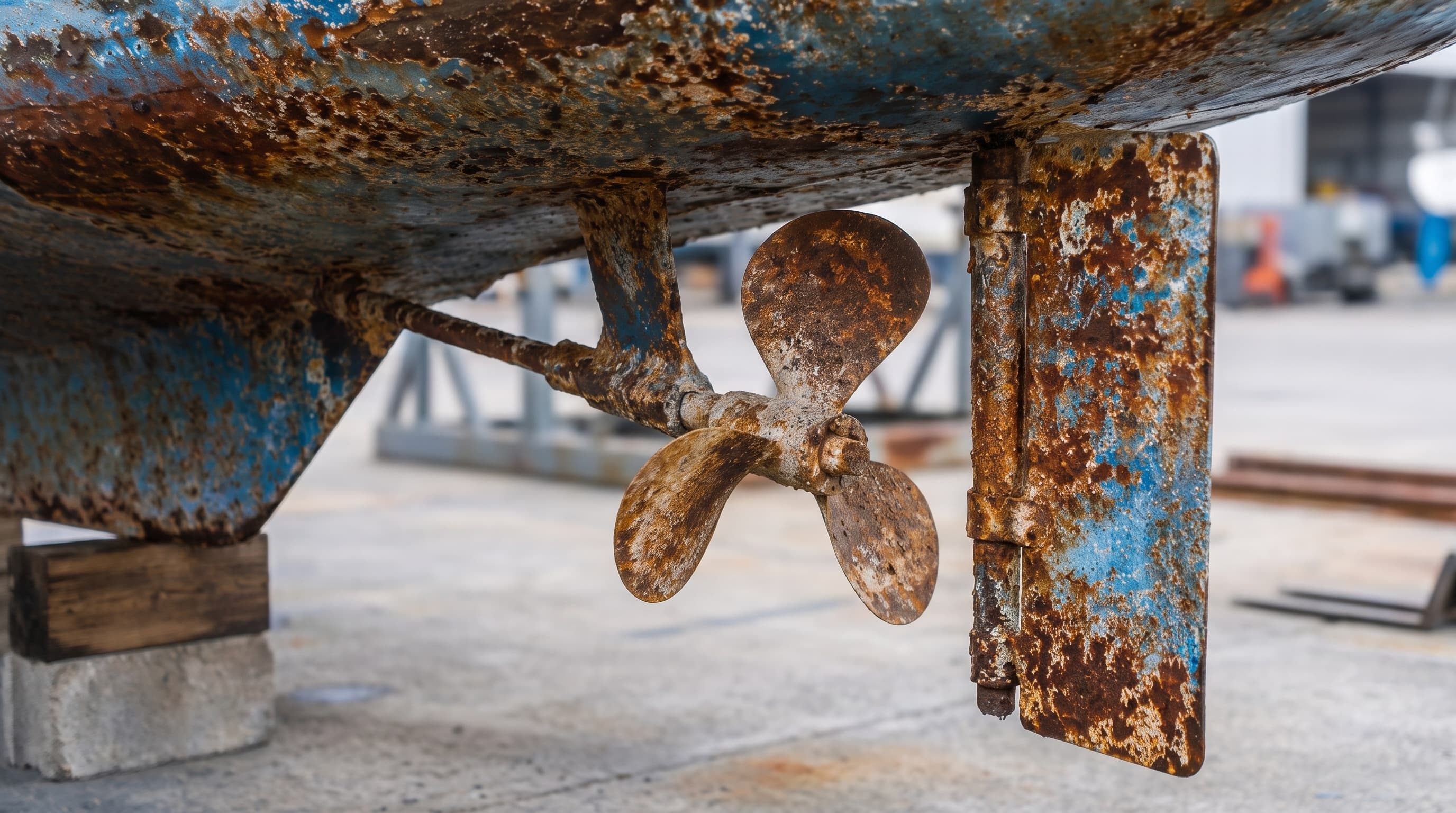
Most “electrolysis” complaints are really one of two problems: galvanic corrosion (dissimilar metals, slow and steady) or stray-current corrosion (a leak in the DC system, fast and destructive). They present the same and fix completely differently, which is why the survey comes before the remedy.
Most “electrolysis” complaints are really galvanic or stray‑current corrosion, two very different problems with two very different fixes. The right survey tells them apart in an afternoon.
A submerged Ag/AgCl cell measures hull potential against seawater, establishing the baseline.
Every underwater fitting checked end‑to‑end against the bonding bus.
AC and DC leakage isolated circuit by circuit, shore power included.
Anode mass, placement and ICCP output verified against the protection budget.
A written report with measurements, photos and a prioritized fix list.
Reference-cell readings of hull potential, bonding continuity checks on every underwater fitting, an AC/DC stray-current sweep including shore power, an anode and ICCP audit, and a written report with measurements, photos and a prioritized fix list. Most surveys complete in an afternoon dockside.
Rapid anode loss usually means the protection system is working overtime against a real problem: often stray current from the boat or a neighbor, or a bonding fault. It's a symptom worth measuring before it graduates to running gear.
No. The diagnostic survey is done in the water, dockside. Haul-out only enters the picture if remediation requires it, and the survey tells you that before you pay for the lift.
Navigation, communication and monitoring systems installed and repaired right.
Explore serviceAC, DC, shore power and lithium engineered to ABYC standards.
Explore serviceFactory-trained, authorized service for the Naviop Loop bridge.
Explore service